

Hit enter to search or ESC to close



The first five years of life are a time filled with extraordinary early childhood development milestones. Babies are born with more than 100 billion brain cells, and these connections form at a breathtaking pace. This can be a turbulent time for parents, with the exhilaration of watching your child flourish accompanied by the natural worries about healthy development.
Remember that development is not a race; children progress at different speeds. There are typical milestones that help guide expectations, and understanding each childhood development stage helps parents celebrate achievements, notice potential concerns early, and provide the support children need to thrive.
Below, we’ll walk through the developmental milestones from birth to 5 years, highlighting what you can expect and why it matters. We have broken down each stage into physical, social-emotional, cognitive/sensory, and language milestones.
Birth to 3 months, the first connections
In the first few months, babies begin adjusting to the world outside the womb. Most of these baby milestones involve building the foundations for movement, communication, and social bonds.
Physical
Newborns should be able to lift their heads briefly, move their arms and legs vigorously, and startle at loud sounds. By around 8 weeks, many can lift their heads when lying on their tummies and begin to kick with strength.
Social-emotional
Early developmental stages of social-emotional learning begin here. Babies will respond to familiar voices and may smile for the first time by 6–8 weeks, which is one of the most rewarding growth milestones for parents.
Cognitive and sensory
Infants track faces and bright objects, and they turn toward sounds. They also begin making cooing noises as early precursors to speech.
Parent tip: Talk, sing, and make eye contact. Research shows that babies’ brains develop best with warm, responsive interactions.
3 to 6 months, discovering the world
By the halfway mark of the first year, babies are more alert, interactive, and mobile.
Physical
By 5 months, your baby should roll from back to tummy, hold toys briefly, and sit with support. Tummy time now helps strengthen chest and neck muscles.
Social-emotional
You can expect laughter to emerge, and babies enjoy peek-a-boo and other simple games. They should recognise caregivers and may become wary of strangers.
Cognitive
Babies begin to explore with their hands and mouth, shaking toys or banging them together. They start to anticipate familiar routines, like feeding time.
Language
Babbling begins to sound a little more speech-like, with repetitive syllables, like “ba-ba,” “da-da”. Studies in developmental psychology show that even at this age, infants are active learners. They use patterns in speech and sights around them, a process called “statistical learning”, to make sense of the world.
6 to 12 months, on the move
After the first six months, you’ll begin to notice dramatic changes in infant developmental milestones. Babies should begin to move independently and interact with intention.
Physical
Many babies crawl, pull up to stand, or “cruise” along furniture. By their first birthday, some may take their first independent steps.
Social-emotional
Babies will show clear preferences for caregivers, wave goodbye, and engage in simple gesture games.
Cognitive
They should understand object permanence, such as searching for toys hidden under a blanket. They should also begin imitating actions like clapping.
Language
By 12 months, most babies will say a few simple words like “mama” or “dada” with intent.
Parent tip: Celebrate curiosity! Provide safe spaces for exploration. Babies learn by dropping, banging, and experimenting with objects.
12 to 24 months, the toddler years begin
The first year after infancy is a time of first steps, first words, and first independence. Toddlers are busy, determined little explorers.
Physical
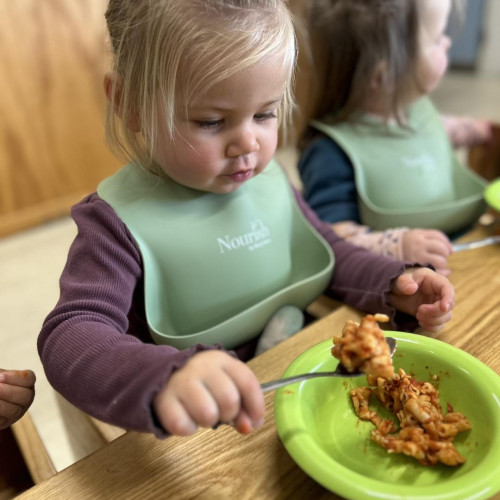
Walking becomes steadier, and climbing stairs with help is common. By 18 months, many can run clumsily, use a spoon, and stack three or more blocks.
Social-emotional
At this age, toddlers should start to imitate adult behaviours, play alongside (but not necessarily with) peers, and form strong attachments to parents. Separation anxiety may peak.
Cognitive
Pretend play emerges, “feeding” dolls, pushing toy cars. Toddlers will begin problem-solving by trial and error and learning through play.
Language
Typically, vocabulary explodes from a handful of words at 12 months to 50+ words by two years of age. Two-word combinations (“more milk,” “mummy,” “car”) are to be expected. A large Australian study found that developmental concerns in language are particularly common between ages 1 and 2, which highlights the importance of monitoring your child's development closely during this stage.
2 to 3 years, independence and imagination
The “terrific twos” bring rapid advances in motor skills, communication, and social awareness, alongside big emotions.
Physical
Children should run with a bit more finesse, kick balls, climb onto furniture, and begin pedalling ride-on toys. Fine motor skills progress to drawing circles and building towers of 5–6 blocks.
Social-emotional
Parallel play (playing alongside, not necessarily with, other children) dominates. Tantrums are common as toddlers struggle with independence.
Cognitive
Toddlers sort objects, identify body parts, and should start to enjoy puzzles. Symbolic play expands; a block becomes a “car”, for example.
Language
Vocabulary surges. They should use short sentences, ask simple questions, and be understood much of the time.
Parent tip: Provide reassurance during tantrums; big feelings are part of learning self-control. Offer choices to give your child a sense of autonomy.
3 to 4 years, nursery and kindergarten
At this stage, children move from toddlerhood into early childhood proper. Their imagination, language, and social skills will expand dramatically.
Physical
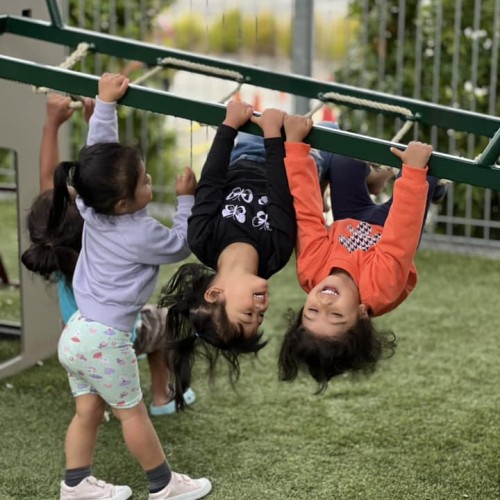
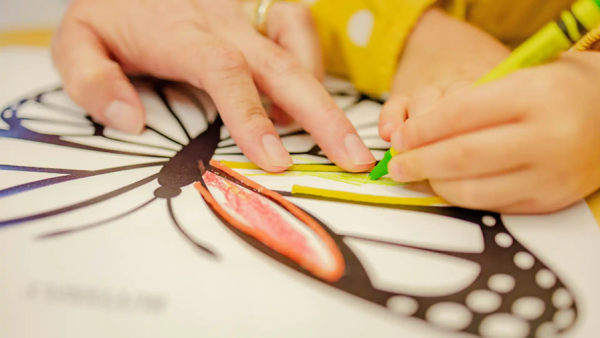
Children can hop, stand on one foot, throw and catch balls, pedal tricycles, and cut with safety scissors.
Social-emotional
You should expect cooperative play to blossom. Children start sharing, taking turns, and inventing complex pretend games. They should also be able to clearly distinguish between “real” and “pretend.”
Cognitive
They should be able to recall parts of stories, count small groups of objects, and sort by shape or colour. They should understand simple time concepts like “yesterday” and “tomorrow.”
Language
Full sentences are used, often 4–5 words long. They enjoy telling short stories, asking endless “why” questions, and experimenting with jokes. Language-rich environments are critical at this age. Studies show that preschoolers exposed to interactive reading and extended conversations develop stronger vocabulary and comprehension, which predict later reading success.
4 to 5 years, ready for school
By age five, most children show readiness for the transition to school. They are more independent, socially aware, and cognitively capable.
Physical
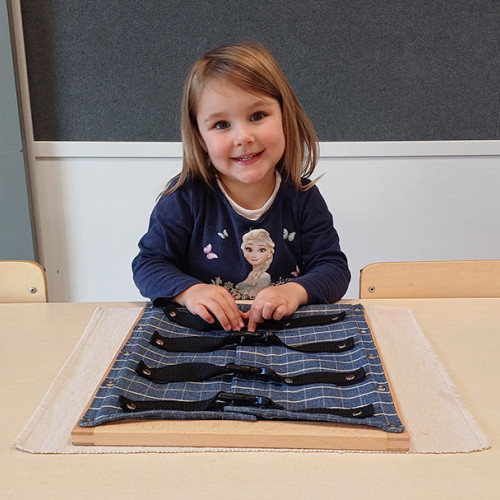
Children can skip, hop on one foot, attempt somersaults, and dress themselves. They draw people with details, cut paper, and write some letters.
Social-emotional
They should want to please friends and teachers, show empathy, and understand rules. Peer relationships grow in importance.
Cognitive
Counting, naming colours, matching shapes, and recognising letters become more consistent. Many can retell longer stories and follow multi-step instructions.
Language
Children engage in longer conversations, use future tense (“I will”), and tell elaborate make-believe stories.
Parent tip: Give them activities that encourage independence. Let your child practice dressing, tidying up, and making small choices; these skills build confidence for school.
Celebrating Every Step of Your Child’s Early Journey
From a newborn’s first smile to a five-year-old’s first joke, each early childhood milestone is a step in the incredible journey of early childhood. These early years lay the foundation for lifelong learning, health, and relationships.
Parents play the central role. Respond warmly, encourage play, and seek support if ever in doubt. Remember, reaching each growth and development milestone is a journey, not a competition. Each child’s path is unique, and every step is worth celebrating.
Discover how Busy Bees can support you and your child through this wonderful and rewarding journey.